Head Impacts in Youth Sports: What Parents and Trainers Should Know
In this article7 sections
How common are head impacts in youth sports, why young brains are vulnerable, and what parents and trainers can do to help. Backed by research.
Head Impacts in Youth Sports: What Parents and Trainers Should Know
Head impacts in youth sports include both diagnosed concussions and the far more frequent subconcussive hits from routine contact, like heading a soccer ball or absorbing a block in football. Because young brains are still developing, awareness, good technique, and smart recovery habits matter more here than almost anywhere else.
This is a companion to our overview of head impact support. Below, we look at how common these impacts really are, why young athletes are more vulnerable, and what the adults around them can do.
How common are head impacts in youth sports?
More common than most people realize, and most of them never show up as a diagnosed injury.
- Football. Youth tackle football athletes can experience a median of around 378 head impacts in a single season. Compared with flag football, tackle players ages 6 to 14 sustained roughly 15 times more head impacts, and 23 times more high-magnitude ones, during practices and games (CDC).
- Soccer. Roughly 90% of head impacts in soccer come from purposeful heading, with head accelerations of up to about 20 g when heading the ball (research on youth heading).
The point is not to alarm anyone. It is that the diagnosed concussions, the ones that make the injury report, are only part of the picture.
Why young brains are more vulnerable
A child's brain keeps developing into the late teens and twenties. That developing brain can be more sensitive to both minor and major impacts, and research suggests repeated head impacts may have cumulative effects on brain structure and function over time (Brain Injury Association of America). Evidence also indicates female athletes may face a higher concussion risk than males in comparable sports.
This is why so much youth-sports policy has shifted toward reducing exposure, not just managing concussions after they happen.
It is not only about concussions
The most useful mental shift for parents and trainers is this: a young athlete can finish a game feeling completely fine and still have given their brain a demanding day of routine, subconcussive contact. Supporting the brain around all of those moments, not only the diagnosed ones, is the whole idea behind proactive care.
What parents and trainers can do
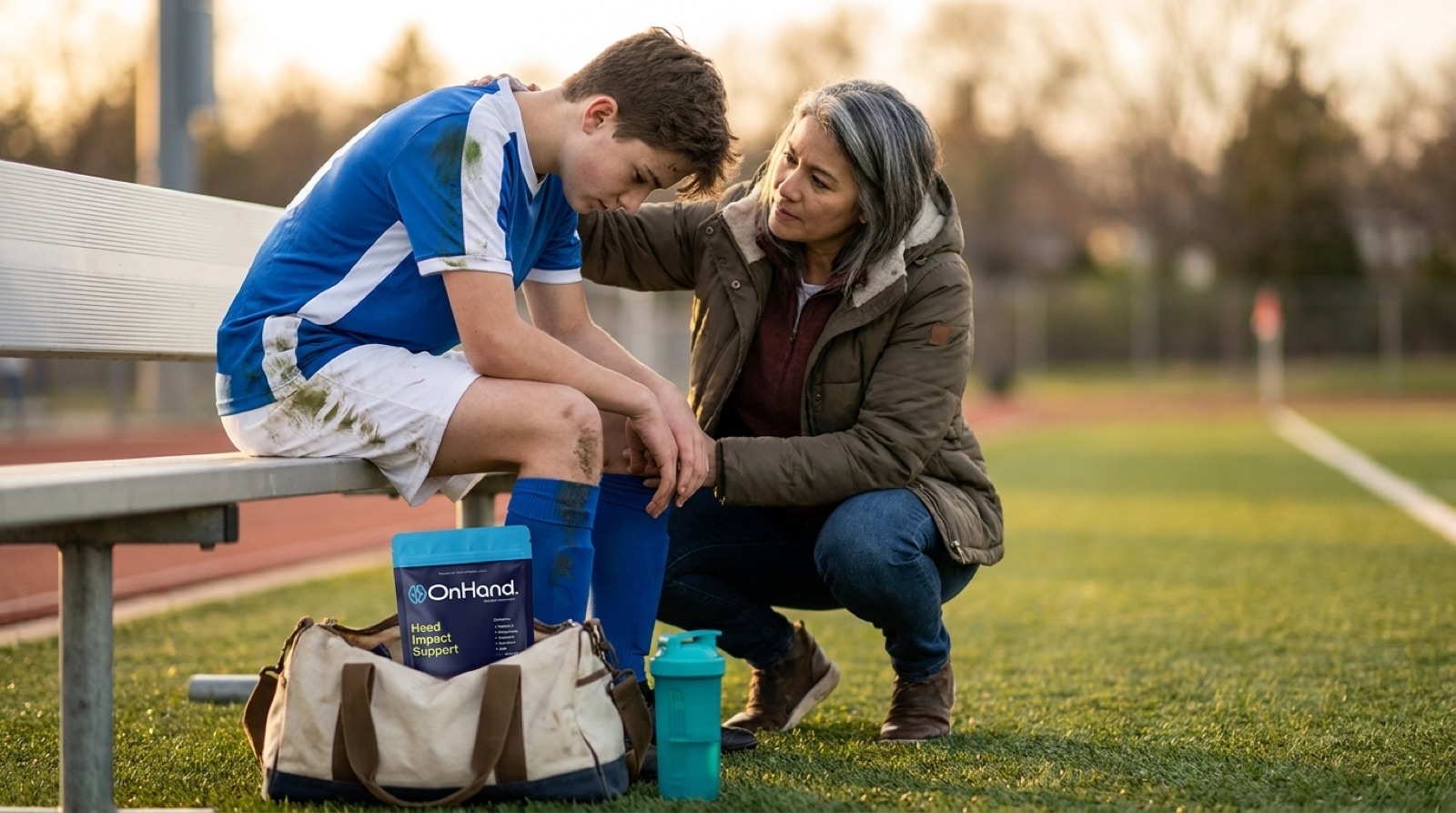
The good news: a handful of practical habits make a real difference.
- Reduce unnecessary exposure. Sensible rules help. For example, U.S. Soccer banned headers for players under 10 and limited heading practice for ages 11 to 13, and early data suggests header-restriction policies are associated with lower concussion rates (AAOS, 2025).
- Teach good technique. Proper heading and tackling, plus engaging the neck at contact, can reduce the force reaching the brain.
- Build neck and core strength. Age-appropriate strengthening adds stability and may help reduce impact forces.
- Know the red flags. Worsening headache, vomiting, confusion, loss of consciousness, or seizures need emergency care. Any suspected concussion means removal from play and evaluation by a professional.
- Respect recovery. Most people recover within about 10 days, followed by a gradual, guided return to activity once symptoms resolve (Children's Healthcare of Atlanta).
- Support the brain around activity. Alongside the above, wellness habits like hydration, sleep, and targeted nutrition give the brain the building blocks it uses most. (More on that in nutrients for brain recovery.)
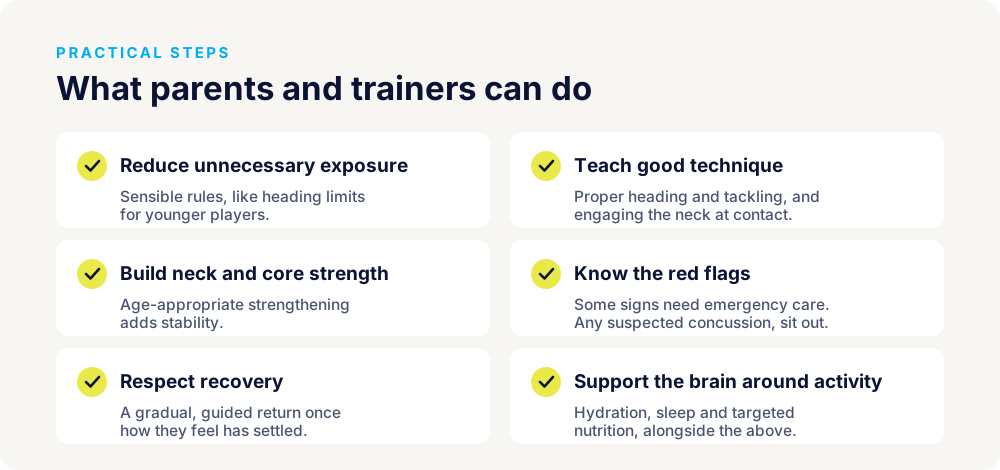 Six things that genuinely help.
Where head impact support fits
Head impact support is a wellness approach: awareness, recovery habits, and targeted nutrition, focused on the moments young athletes' brains are working hardest. It complements, and never replaces, safe play, coaching standards, and medical care. For families already doing the important things, like reporting injuries and respecting recovery, it is one more proactive, supportive layer.
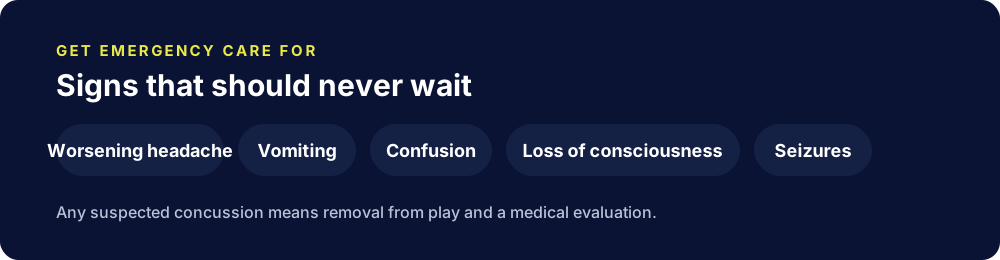 Signs that should never wait.
Frequently asked questions
How many head impacts do youth athletes take in a season? It varies by sport, but youth tackle football players can average hundreds of head impacts per season, and most are subconcussive, meaning they cause no obvious symptoms.
Is heading a soccer ball safe for kids? Governing bodies have restricted heading for younger players because developing brains are more vulnerable. U.S. Soccer banned headers under age 10 and limited heading practice for ages 11 to 13.
What are the warning signs of a concussion in a young athlete? Headache, dizziness, confusion, nausea, or sensitivity to light or noise. Red flags like worsening headache, vomiting, or loss of consciousness need emergency care. Any suspected concussion means removal from play and professional evaluation.
Can supplements prevent concussions in youth sports? No. Nothing prevents concussions except reducing exposure and playing safely. Nutrition and wellness habits may support the brain, but they are not protective equipment or medical treatment.
The takeaway
Head impacts are a routine part of youth contact sports, and most never get diagnosed. Young, developing brains make awareness especially important. The best protection is still the basics: reduce exposure, teach technique, know the red flags, and respect recovery. Supportive wellness habits, including targeted nutrition, can sit alongside all of that, giving families a proactive way to look out for the athletes they care about.
Learn the fundamentals in our guide to head impact support, or explore doctor-vetted resources at myconcussiondr.com.
Sources
- Comparing Head Impacts in Youth Tackle and Flag Football. Centers for Disease Control and Prevention. https://www.cdc.gov/traumatic-brain-injury/data-research/comparing-head-impacts/index.html
- Purposeful Heading Performed by Female Youth Soccer Players Leads to Strain Development in Deep Brain Structures. (2021). https://www.ncbi.nlm.nih.gov/pmc/articles/PMC8655815/
- Header Restriction Policy in Youth Soccer Shows Promising Impact on Concussion Rates. American Academy of Orthopaedic Surgeons (AAOS), 2025. https://aaos-annualmeeting-presskit.org/2025/research-news/header-restriction-policy-in-youth-soccer-shows-promising-impact-on-concussion-rates/
- Study Raises Questions about Long-Term Consequences to Brain Health of Young Athletes in Contact Sports. Brain Injury Association of America. https://biausa.org/public-affairs/public-awareness/news/study-raises-questions-about-long-term-consequences-to-brain-health-of-young-athletes-in-contact-sports
- Concussion Prevention in Kids and Teens. Children's Healthcare of Atlanta. https://www.choa.org/parent-resources/concussion/concussion-prevention-in-kids-and-teens
This article is for general education and wellness information only. It is not medical advice and does not diagnose, treat, cure, or prevent any condition. Consult a qualified healthcare professional for concerns about head injuries.
Medically reviewed by MyConcussionDr medical team. This article is for general information and is not medical advice. Anyone with a suspected head injury should be evaluated by a licensed provider.

Start your readiness ritual
One minute a day. Keep it nearby.