Why Two Concussion Doctors Built a Scoop Instead of a Pill
In this article7 sections
The format was a clinical decision, not a marketing one. Why OnHand is a powder you mix into water, and what that choice makes possible that a capsule does not.
Why Two Concussion Doctors Built a Scoop Instead of a Pill
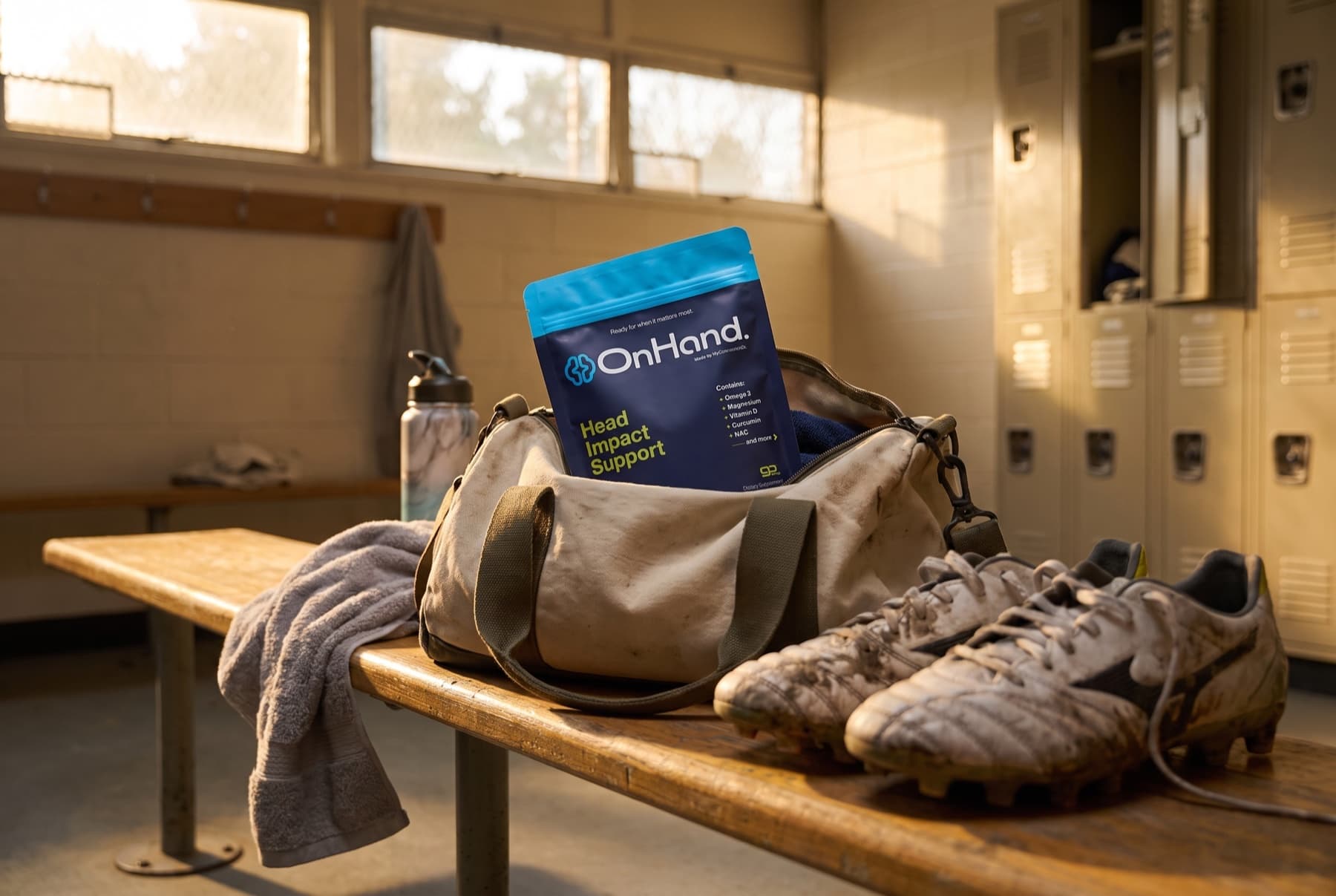
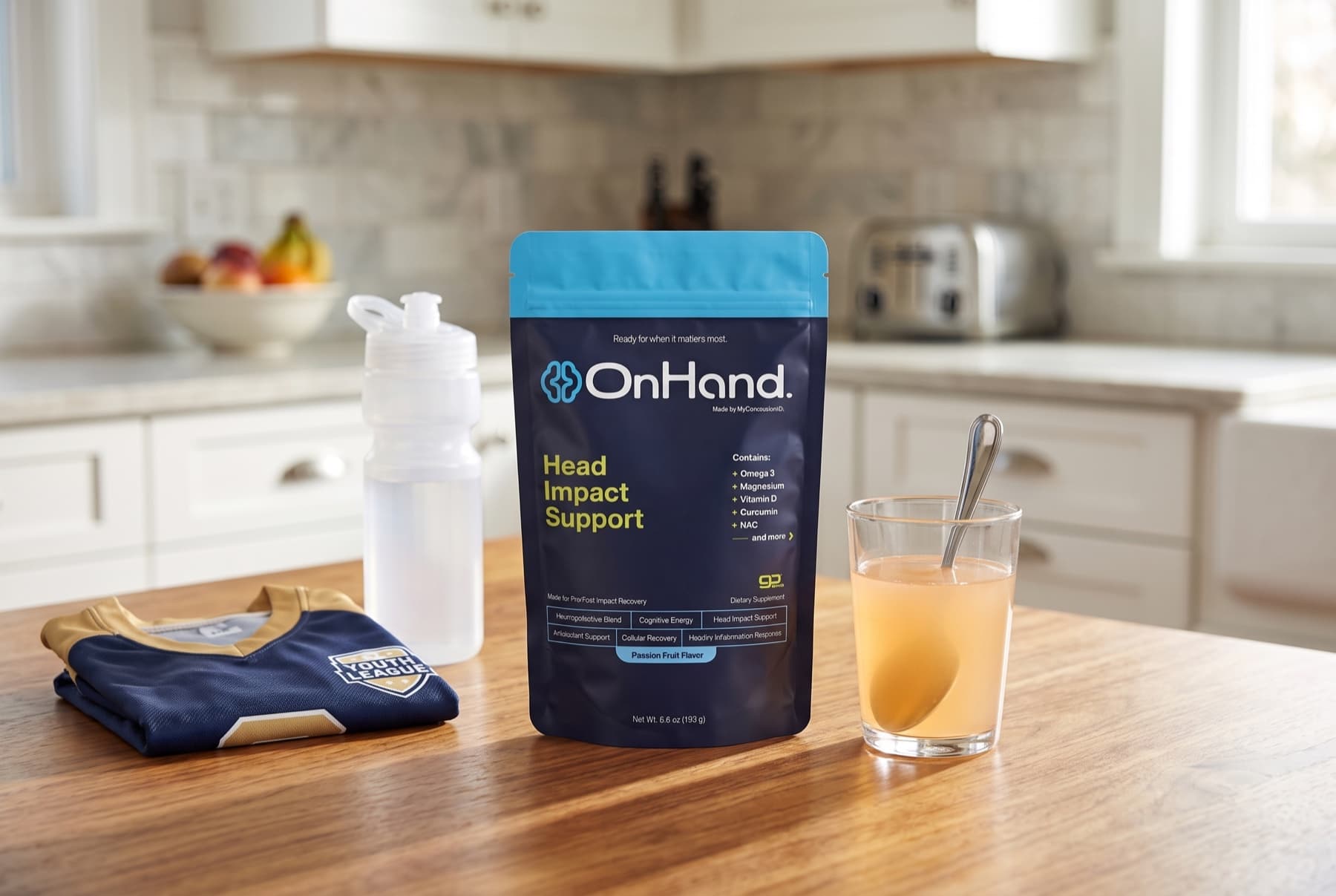
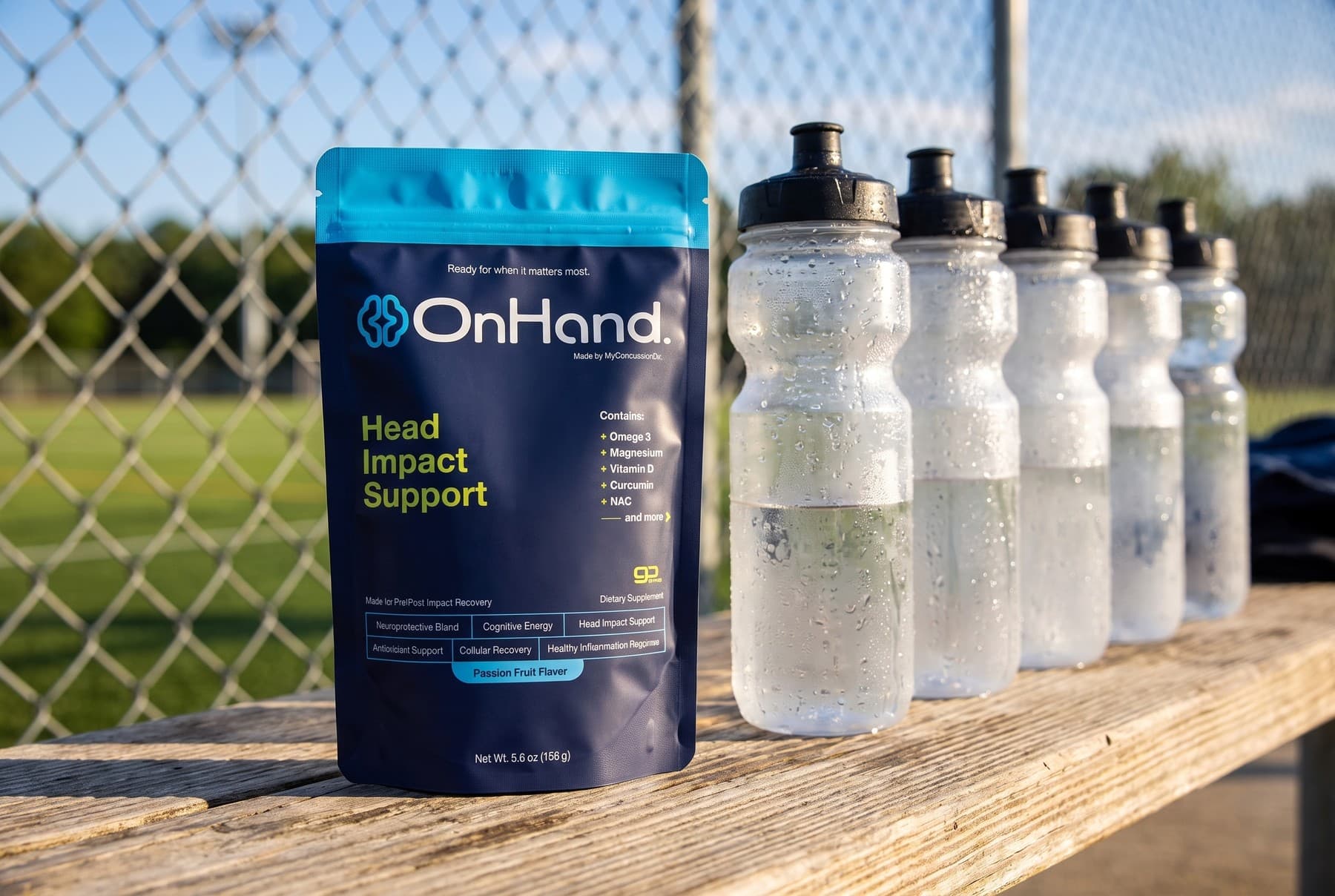
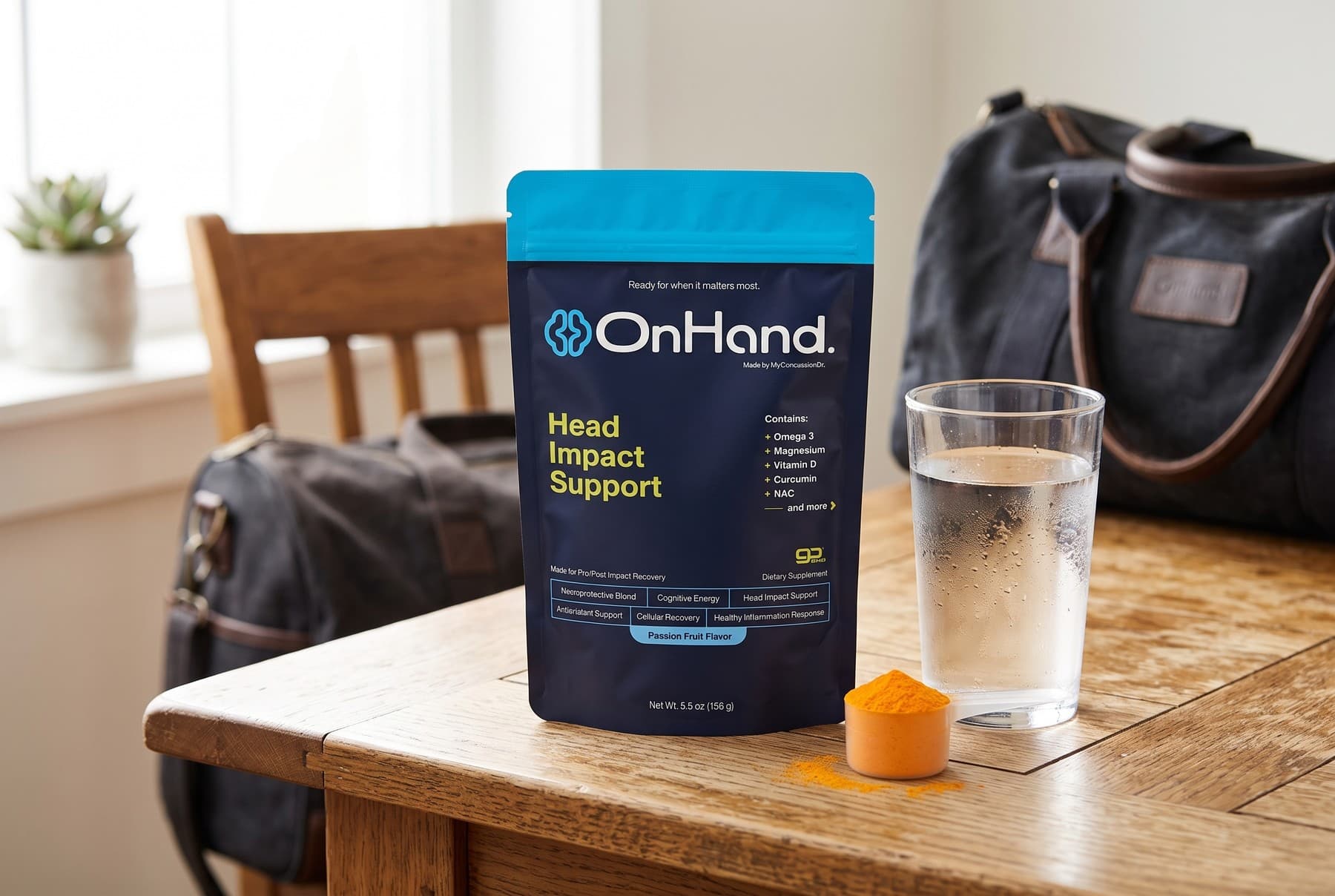
OnHand is a powder you mix into water rather than a capsule, and that was a clinical decision before it was ever a product one. It came out of what Dr. Baric and Dr. Meredith kept watching happen in the clinic: the format of a recommendation turns out to shape whether anyone actually follows it.
The clinical work came first. MyConcussionDr has spent more than forty years in practice, across more than fifty thousand families, sitting with people after the fall, the hit, the sideline that went quiet. OnHand came out of that room, not out of a marketing brief.
The pattern that kept repeating
Families arrived after the scary moment and asked the same question in different words. What should we have been doing before this?
There was an answer. Sleep, hydration, recovery habits, sensible nutrition, understanding that the hits nobody reports still add up across a season. It was good advice and it was free. It was also, as advice, almost impossible to hold on to. It had no shape. Nobody walks out of a clinic and builds a habit out of a list of principles.
The thing the clinic kept recommending did not exist as an object. So they built it.
Why the format was the hard part
It is tempting to assume the format question is trivial next to the formulation question. In practice the two were tangled together from the start, and three things pushed away from a capsule.
Dose honesty
This is the plain one. Several of the actives with the most literature behind them, the ones people actually want in a blend of this kind, are not small. Getting meaningful amounts of them into capsules means handing someone a fistful several times over, or quietly cutting the amounts until the label reads well and the contents do not.
That second option is extremely common in this category and it is the reason so many products list an impressive number of ingredients in amounts that could not do much. A scoop sidesteps the trade entirely. Eleven actives at amounts chosen for their own sake rather than for what fits in a shell.
It has to be a moment, not a chore
A capsule is something you swallow while thinking about something else. A scoop into a glass of water is thirty seconds of standing still. That sounds like a small distinction and it is not, because OnHand is built around specific moments rather than around a routine you forget you have. Before higher risk activity. After a hard session. The format keeps the moment attached to the reason.
A family can share a kitchen counter
The clinic was never treating one athlete in isolation. It was treating a household where somebody plays a contact sport and everybody is worried about it. A tub on the counter is a household object in a way a prescription-looking bottle in a cabinet is not, and the difference shows up in whether anyone remembers.
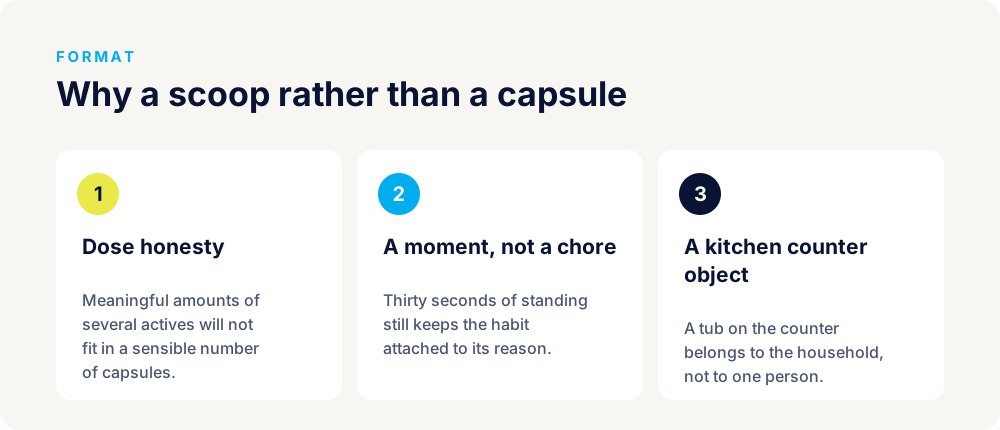 Three reasons the format went the way it did.
What the format does not do
A format choice is not a health claim, and it is worth being clear about the boundary.
A powder does not make an ingredient work better than the same ingredient in a capsule. It does not make OnHand a treatment for anything, and it does not change what the underlying research does and does not support. The evidence for nutrition in this area is genuine and it is also still developing, which is why the language on this site stays deliberately careful. We went through the detail in nutrients for brain recovery.
What the format does is remove the reasons a good habit does not survive contact with a real week. That is a smaller claim than most supplement brands make, and it is the one that is actually true.
What went into it
The blend is eleven actives, each included with a reason that can be stated out loud rather than because the ingredient tests well on a label. It is formulated by clinicians who spend their working lives on head impact, made by the same team, research and standards as the clinical practice behind it, and being taken through third-party sport certification, which is in process rather than complete.
It is taken around activity rather than as a background routine. That framing is deliberate and it is the part most often lost when people describe products in this category. OnHand is a readiness ritual, tied to the moments that ask something of the brain.
Important: a wellness product, and nothing more than that
OnHand is a wellness product made to support the brain's ordinary readiness and recovery processes around activity. It does not diagnose, treat, cure or prevent concussions or any other condition, and no format choice changes that.
If a head injury is suspected, stop the activity and seek prompt medical evaluation. Do not use OnHand to make return-to-play, return-to-work, or return-to-activity decisions. For what the first two days should actually look like, see the first 48 hours after a head impact.
Frequently asked questions
Why is OnHand a powder instead of a capsule? Because several of the actives are physically large at meaningful amounts, and capsules force a choice between an unrealistic number of them and quietly cutting the amounts. A scoop avoids that trade, and it turns the routine into a deliberate moment rather than something swallowed absent-mindedly.
Does a powder work better than a capsule? Not inherently. The format does not change what an ingredient does. It changes what amounts are practical to include and how likely a habit is to survive a real week.
Who formulated OnHand? Dr. Baric, Founder and CEO, and Dr. Meredith, Founder and Medical Director, working from the clinical practice at MyConcussionDr in Cary, North Carolina.
How many ingredients are in it? Eleven actives, each selected for a stated reason rather than to lengthen the label.
Is OnHand taken every day? No. It is a readiness ritual used around activity: before higher risk activity, and after impact to support recovery.
The takeaway
The scoop is not a gimmick and it is not a preference. It is what happens when the people designing a product are the same people who have spent years watching good advice fail for boring, practical reasons. Make the right thing easy to do at the moment it matters, and it gets done. That is most of what this format is for.
Learn more about the readiness ritual at keeponhand.com, or explore doctor-vetted recovery resources at myconcussiondr.com.
Sources
- Mitigating Traumatic Brain Injury: A Narrative Review of Supplementation and Dietary Protocols. (2024). Nutrients, 16(15), 2430. https://www.mdpi.com/2072-6643/16/15/2430
- Uncovering the hidden effects of repetitive subconcussive head impact exposure: a mega-analytic approach. (2024). Human Brain Mapping. https://pmc.ncbi.nlm.nih.gov/articles/PMC11345636/
- Centers for Disease Control and Prevention. HEADS UP Guidelines and Recommendations. https://www.cdc.gov/heads-up/guidelines/index.html
This article is for general education and wellness information only. It is not medical advice and does not diagnose, treat, cure, or prevent any condition. Consult a qualified healthcare professional for concerns about head injuries.
Medically reviewed by MyConcussionDr medical team. This article is for general information and is not medical advice. Anyone with a suspected head injury should be evaluated by a licensed provider.

Start your readiness ritual
One minute a day. Keep it nearby.