What Is Head Impact Support? A Guide for Athletes, Trainers, and Parents
In this article8 sections
- Head impact support, defined
- Why head impacts matter, not just concussions
- The two sides of head impact support: before and after
- What the science says about nutrition and the brain
- What to look for in a head impact support product
- Important: head impact support is not a treatment
- Frequently asked questions
- The takeaway
Head impact support means caring for the brain before activity and after a hit. Learn what it is, why athletes use it, and what the science says.
What Is Head Impact Support?
Head impact support is a proactive approach to caring for the brain around the head impacts athletes absorb, both before high-risk activity and after a hit. It brings together awareness, sensible recovery habits, and targeted nutrition to support the brain's natural readiness and recovery, rather than waiting for a diagnosed injury before paying attention.
It is a simple idea with a specific focus: the brain works hard on game day, and it deserves the same intentional care that athletes already give their muscles, joints, and sleep. Below, we break down what head impact support means, why it matters, what the research shows, and how to think about it for the athletes you care about.
Head impact support, defined
Head impact support is not a medical treatment, and it is not a replacement for professional care. Think of it as a category of everyday, wellness-first habits and products designed to support the brain the way a good warm-up, hydration plan, or recovery routine supports the body.
In practice, head impact support usually includes:
- Awareness of the hits that come with a sport, including the smaller, routine ones.
- Recovery habits such as rest, hydration, and sleep after demanding sessions.
- Targeted nutrition that supplies the brain with nutrients it uses for energy, cellular repair, and a healthy inflammatory response.
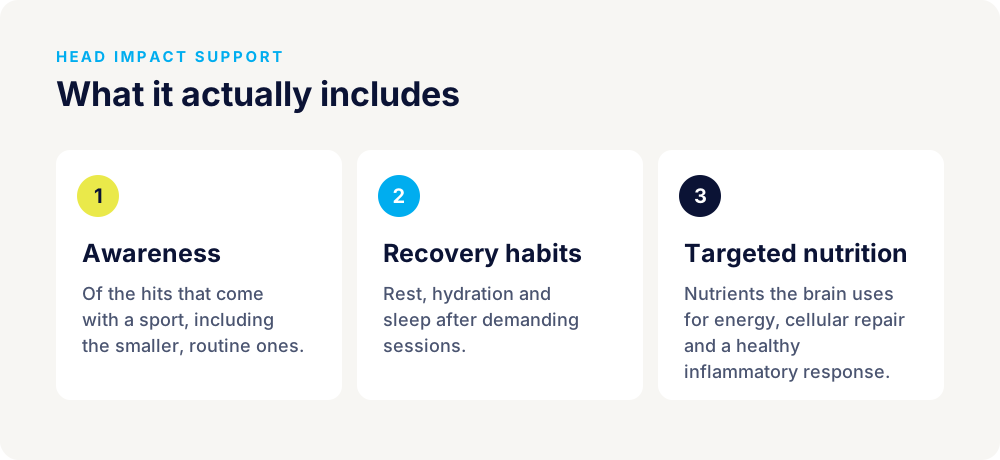 The three parts of head impact support.
The goal is readiness and resilience, framed around the moments that matter: before activity, and after impact.
Why head impacts matter, not just concussions
Most people associate head impacts with concussions, the ones that make the injury report. But research increasingly focuses on the far more frequent hits that do not cause obvious symptoms.
These are often called subconcussive head impacts: routine contact, like heading a ball in soccer or absorbing a block in football, that usually produces no immediate symptoms. A growing body of evidence suggests that repeated subconcussive impacts may have cumulative effects on brain structure and function over a season of contact sport (Human Brain Mapping mega-analysis, 2024).
This is the gap head impact support is built to address. An athlete can finish a game feeling fine and still have given their brain a demanding day. Supporting the brain around all of those moments, not only the diagnosed ones, is the whole point.
The two sides of head impact support: before and after
A useful way to understand head impact support is to split it into two moments.
Before activity: readiness
Preparing the brain before high-risk activity is about giving it the raw materials it uses to work and to buffer stress. This is where nutrition, hydration, and sleep do quiet, foundational work, much like fueling before a long run.
After impact: recovery
After a demanding session or a hit, the focus shifts to supporting the brain's natural recovery processes: rest, hydration, and nutrients that support a healthy inflammatory response and cellular repair.
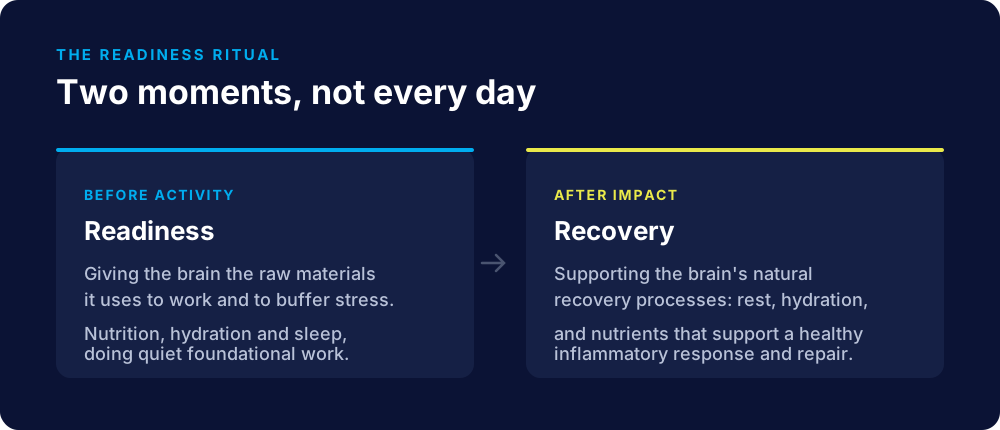 The two moments head impact support is built around.
This before-and-after framing is why many people describe head impact support as a readiness ritual rather than a daily pill. It is intentional, tied to activity, and focused on the moments the brain is working hardest.
What the science says about nutrition and the brain
Nutrition is one of the most researched and accessible parts of head impact support. The evidence is still developing, and no supplement treats or prevents injury, but several nutrients have plausible, well-studied roles in brain health.
- Omega-3 fatty acids (DHA/EPA). DHA is a major structural fat in the brain. Preclinical research suggests omega-3 intake, before or after mild traumatic brain injury, may support functional recovery and a healthy inflammatory response, though larger human trials are still needed (Barrett, McBurney, & Ciappio, 2014, Advances in Nutrition).
- Magnesium. Magnesium is involved in normal nerve signaling and may help modulate excitotoxicity, a stress process studied in the context of brain injury (Nutrients narrative review, 2024).
- Other actives. Compounds such as creatine, citicoline, and antioxidants have been studied for their roles in cellular energy and oxidative stress, with evidence that varies by nutrient and population (systematic review, 2023).
The honest summary: emerging evidence suggests certain nutrients may support the brain's normal energy, repair, and inflammatory processes. That is a supportive role, not a cure, and it works best alongside, not instead of, good habits and professional guidance.
What to look for in a head impact support product
If you are evaluating a product in this category, a few markers separate thoughtful formulations from marketing:
- Doctor-formulated with a clear rationale for each ingredient.
- Third-party tested (for example, NSF Certified for Sport) so athletes can trust what is inside.
- Meaningful actives rather than a long list of trace amounts.
- Wellness-first language that supports the brain and never claims to treat, cure, or prevent injury.
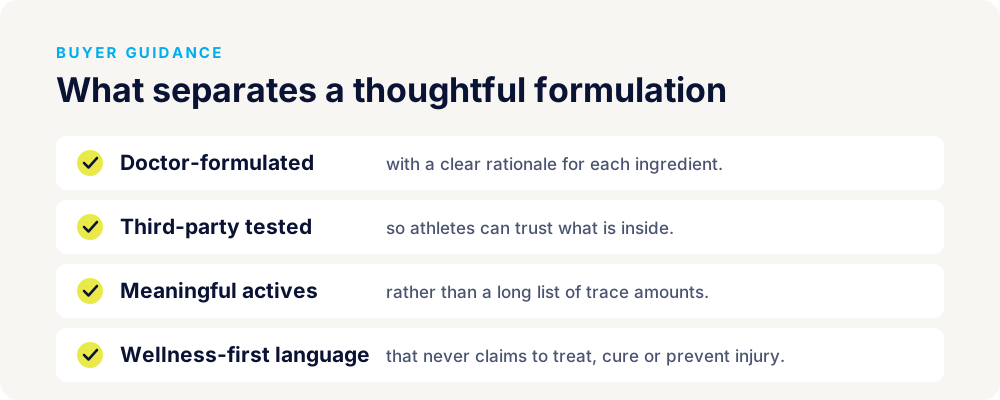 Four markers that separate a thoughtful formulation.
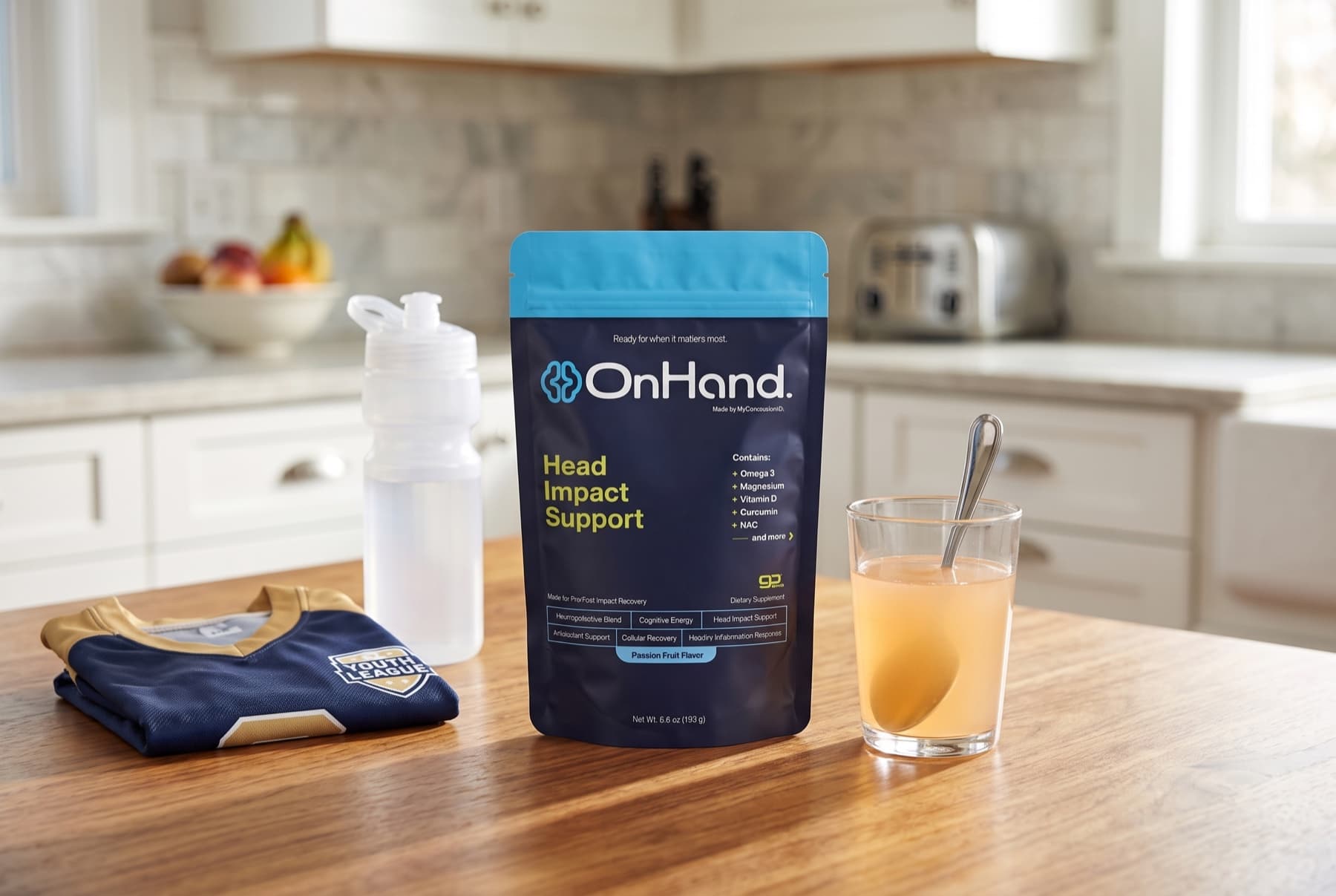
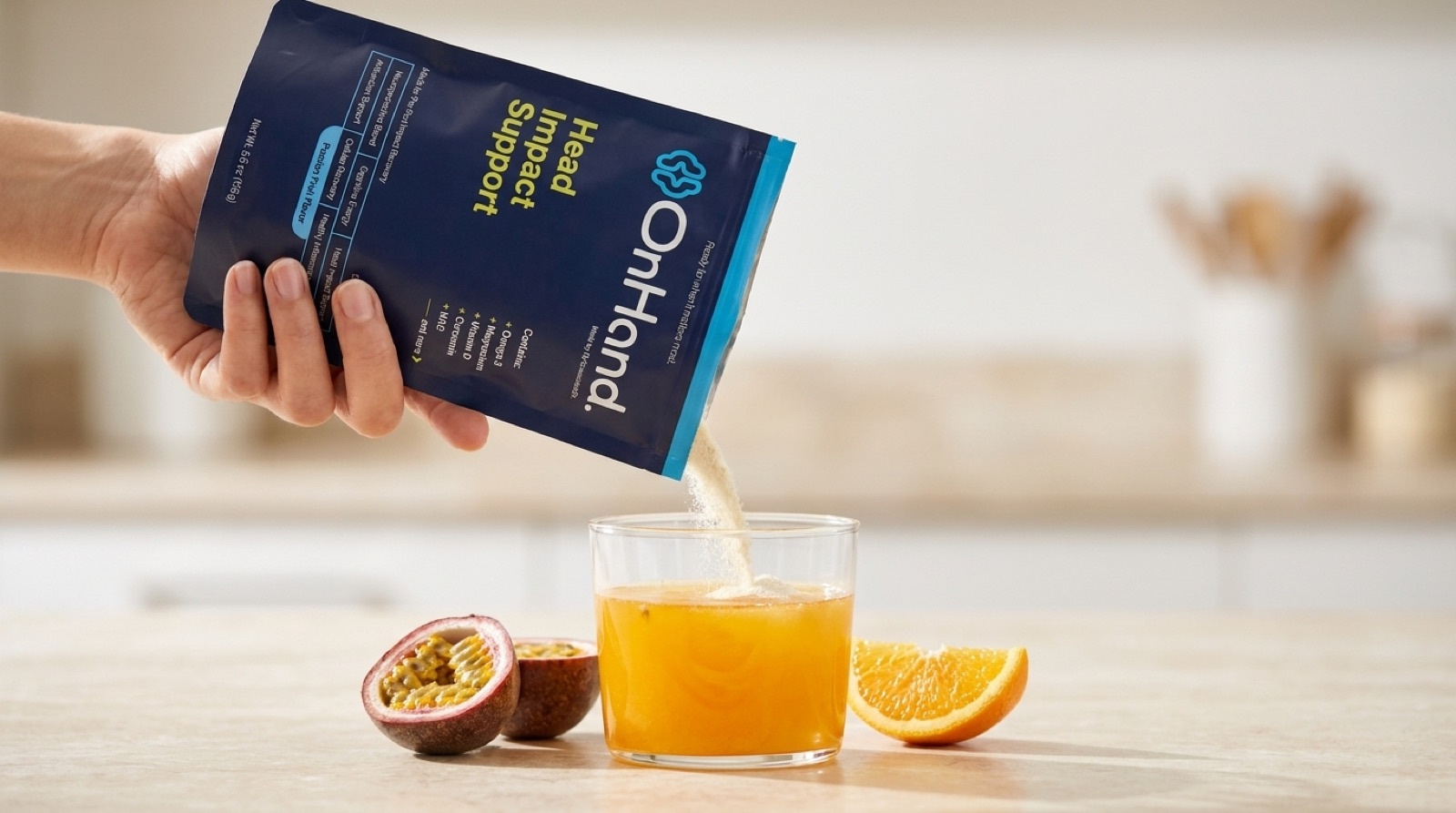
OnHand was built around exactly this: a scoopable, doctor-formulated blend with eleven thoughtfully selected actives, made to support the brain before activity and after impact. It is a readiness ritual, taken around the moments that matter.
Important: head impact support is not a treatment
This is worth stating plainly. Head impact support is a wellness approach. It does not diagnose, treat, cure, or prevent concussions or any other condition. If an athlete shows signs of a concussion or any head injury, they should be removed from play and evaluated by a qualified healthcare professional. Products in this category are meant to complement, never replace, medical care and sport safety protocols.
Frequently asked questions
What is head impact support in simple terms? It is a proactive, wellness-first way to care for the brain around the impacts of sport, combining awareness, recovery habits, and targeted nutrition, before activity and after a hit.
Is head impact support the same as concussion treatment? No. It is not a medical treatment and does not diagnose, treat, or prevent concussions. A suspected concussion always needs professional evaluation.
Can nutrition really support brain recovery? Emerging research suggests certain nutrients, such as omega-3s and magnesium, may support the brain's normal energy, repair, and inflammatory processes. Evidence is still developing, and nutrition works best alongside rest, hydration, and professional guidance.
Who is head impact support for? Athletes in contact and collision sports, and the trainers and parents who look out for them, especially where routine, subconcussive impacts are part of the game.
Is OnHand a daily supplement? No. OnHand is a readiness ritual, used around activity: before to help the brain prepare, and after impact to support recovery.
The takeaway
Athletes already prepare their bodies with intention. Head impact support extends that same care to the brain, focused on the moments it works hardest. It will not replace safe play or medical care, but as a wellness habit built on awareness, recovery, and targeted nutrition, it gives athletes a simple, proactive way to be ready for when it matters most.
Learn more about the readiness ritual at keeponhand.com, or explore doctor-vetted recovery resources at myconcussiondr.com.
Sources
- Barrett, E. C., McBurney, M. I., & Ciappio, E. D. (2014). ω-3 Fatty Acid Supplementation as a Potential Therapeutic Aid for the Recovery from Mild Traumatic Brain Injury/Concussion. Advances in Nutrition, 5(3), 268–277. https://www.sciencedirect.com/science/article/pii/S2161831322011991
- Mitigating Traumatic Brain Injury: A Narrative Review of Supplementation and Dietary Protocols. (2024). Nutrients, 16(15), 2430. https://www.mdpi.com/2072-6643/16/15/2430
- Uncovering the hidden effects of repetitive subconcussive head impact exposure: a mega-analytic approach. (2024). Human Brain Mapping. https://pmc.ncbi.nlm.nih.gov/articles/PMC11345636/
- A Potential Role Exists for Nutritional Interventions in the Chronic Phase of Mild Traumatic Brain Injury, Concussion and Sports-Related Concussion: A Systematic Review. (2023). https://www.ncbi.nlm.nih.gov/pmc/articles/PMC10490336/
This article is for general education and wellness information only. It is not medical advice and does not diagnose, treat, cure, or prevent any condition. Consult a qualified healthcare professional for concerns about head injuries.
Medically reviewed by MyConcussionDr medical team. This article is for general information and is not medical advice. Anyone with a suspected head injury should be evaluated by a licensed provider.
Start your readiness ritual
One minute a day. Keep it nearby.