The First 48 Hours After a Head Impact: A Practical Checklist
In this article8 sections
A step by step guide to the first two days after a head impact: the danger signs, what rest actually means now, and what the current guidance says.
The First 48 Hours After a Head Impact
In the first 48 hours after a head impact, the priorities are simple: stop the activity, rule out danger signs, get evaluated by a healthcare professional, and then rest relatively rather than completely. Everything else can wait. These two days are not about fixing anything, they are about not making it worse and getting the right eyes on it.
This guide walks through that window hour by hour, using current guidance from the CDC and the 2022 international consensus on concussion in sport. It is written for the person who is standing there when it happens: a parent, a coach, an athletic trainer, or the athlete themselves.
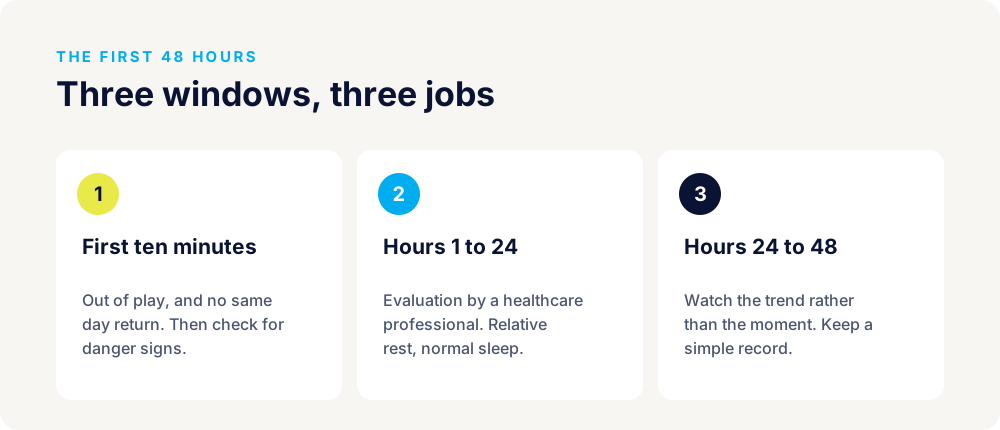 The first 48 hours, split into the three decisions that matter.
The first ten minutes: stop, then look
The single most important decision happens immediately, and it is not a medical one. It is whether the athlete goes back in.
They do not. Current guidance is unambiguous on this point: an athlete with a suspected concussion is removed from play and does not return the same day, regardless of how quickly they say they feel fine. The reason is that the brain is most vulnerable to a second impact while it is still recovering from the first, and nobody on a sideline can tell from the outside how far along that recovery is.
Once they are out, look for the things that need an emergency department rather than a clinic.
Danger signs that mean call 911
The CDC groups these separately from ordinary concussion signs because they can indicate bleeding or swelling inside the skull, which is a different situation entirely:
- One pupil larger than the other
- Drowsiness, or an inability to wake up
- A headache that keeps getting worse
- Slurred speech, weakness, numbness, or loss of coordination
- Repeated vomiting, convulsions, or seizures
- Unusual behaviour, increasing confusion, restlessness, or agitation
- Loss of consciousness, even briefly
Any one of these, and the answer is emergency care now, not a wait and see.
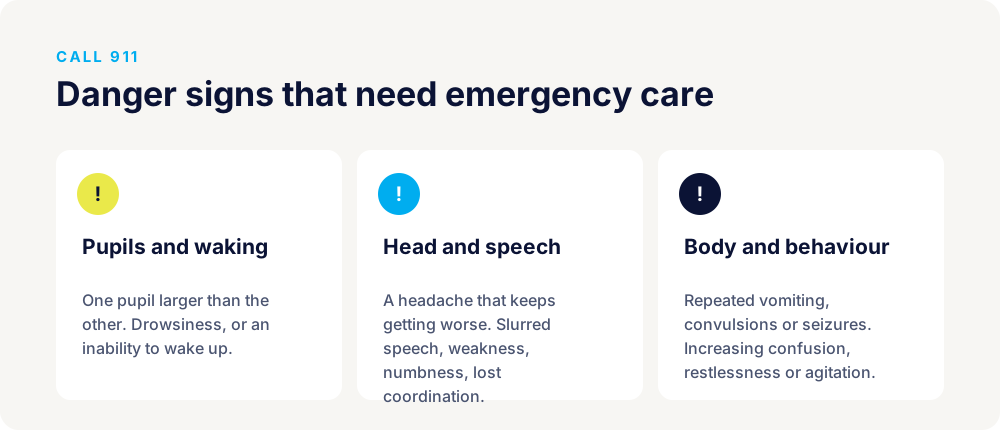 Any one of these means emergency care, not a wait and see.
Hours 1 to 24: get evaluated, then do less
If there are no danger signs, the next step is a proper evaluation by a healthcare professional, ideally within 24 to 48 hours. Bring what you know: how the impact happened, how hard it was, whether there was any loss of consciousness or gap in memory, and whether this person has had a head injury before. That history changes how the evaluation is read.
Between the impact and that appointment, the guidance has shifted meaningfully in recent years, and a lot of well meaning advice is now out of date.
What rest actually means now
For roughly the first 24 to 48 hours, the current consensus recommends relative rest, not strict rest. That means reducing demanding physical and mental load, including screen time, while still moving gently and living normally. A short walk is fine. A dark room for two days is not the recommendation, and extended total rest is no longer considered helpful.
The practical version:
- Gentle movement such as walking is fine if it does not make things worse
- Cut screens back for the first day or two rather than banning them outright
- Skip anything with any chance of another knock to the head
- No return to sport of any kind without a healthcare professional clearing it
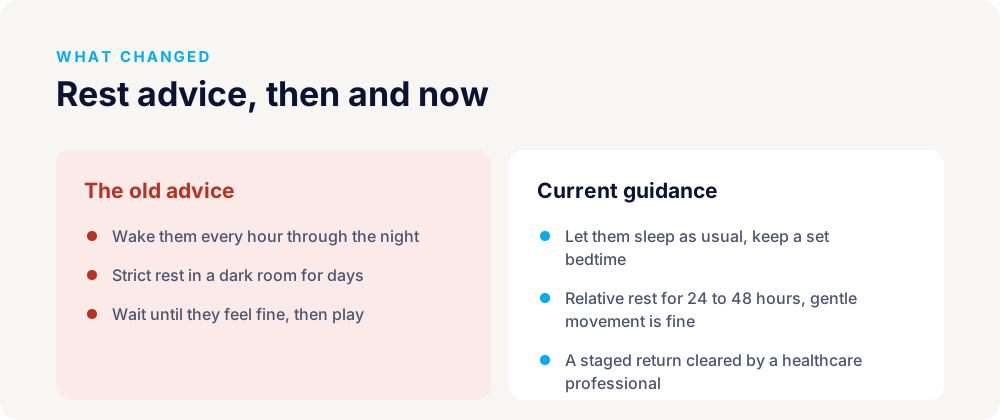 What changed, and why a lot of remembered advice is now out of date.
Let them sleep
This is the piece of old advice that causes the most worry, so it is worth stating plainly. You do not need to wake someone up through the night after a head impact. Current CDC guidance is to let a child sleep as usual and keep a normal bedtime routine. Sleep is when a lot of the work happens. What you should not do is give sleep medication without asking their doctor first.
If the danger signs above appear, that is a different situation and needs emergency care regardless of the hour.
Hours 24 to 48: watch the trend, not the moment
By the second day, the useful question is no longer "how do they feel right now" but "is this getting better or worse". A headache that is fading is a different story from one that is building, even if the two feel similar at a given moment.
Keep a simple record. Time of day, how they say they feel, what they did beforehand. It sounds fussy, but when the clinician asks on day three what the pattern has been, a parent with notes gives a far more useful answer than a parent working from memory.
This is also the point where the athlete usually starts pushing to get back. Hold the line. Returning to activity is a staged progression cleared by a healthcare professional, not a judgement call made at a kitchen table, and we walk through each of its six steps in return to play after a head impact.
What about food and hydration in those two days?
This part matters less than the four things above, and anyone who tells you otherwise is selling something. But it is not nothing either, and it is usually the only part a family has full control over.
Hydration is the straightforward one. Fluid balance affects how people feel and perform generally, and research in athletes has found that larger fluid deficits, in the range of 3 to 5 percent of body mass, are associated with poorer cognitive performance and worse mood. That is a general finding about hydration, not a finding about head injury, and it should be read that way. Still, someone who has just come off a hot field is often behind on fluids before the impact even happened.
Nutrition is the murkier one, and honesty matters more here than enthusiasm. Several nutrients have plausible, studied roles in the brain's ordinary energy, repair and inflammatory processes. Omega-3 fatty acids and magnesium are the two with the most literature behind them in this context, and the evidence base is still developing. What none of that adds up to is a nutrient that treats a head injury. It does not, and no product should tell you it does.
The reasonable framing is that a brain doing demanding repair work is better served fed and hydrated than not, in the same way a healing muscle is. That is a supporting role around good care, never a substitute for it, and it sits inside the wider picture we set out in what is head impact support.
Important: this window is about care, not products
Nothing in the first 48 hours should involve a decision about a supplement. The decisions that matter in this window are: removal from play, checking for danger signs, professional evaluation, relative rest, and normal sleep. Those are free, and they are the ones that count.
OnHand is a wellness product built to support the brain's ordinary readiness and recovery processes around activity. It does not diagnose, treat, cure or prevent concussions or any other condition, and it is not part of a head injury response plan. If a head injury is suspected, stop the activity and seek prompt medical evaluation. Do not use OnHand to make return-to-play, return-to-work, or return-to-activity decisions.
The 48 hour checklist
For the fridge door, or the coach's bag:
- Out of play immediately. No same day return, no exceptions.
- Check for danger signs. Unequal pupils, worsening headache, repeated vomiting, confusion, seizure, trouble waking. Any of these, call 911.
- Get evaluated by a healthcare professional within 24 to 48 hours.
- Relative rest, not a dark room. Gentle movement is fine, screens reduced, nothing with impact risk.
- Normal sleep. Do not wake them through the night. No sleep medication without a doctor.
- Write down how it goes. Time, how they feel, what they had been doing.
- Stay fed and hydrated. Ordinary, sensible, not a treatment.
- Return to sport only through a staged progression cleared by a healthcare professional.
Frequently asked questions
What should I do in the first hour after a head impact? Stop the activity and remove the athlete from play. Check for danger signs such as unequal pupils, a worsening headache, repeated vomiting, confusion, seizure or difficulty waking. If any are present, seek emergency care immediately. If not, arrange an evaluation by a healthcare professional within 24 to 48 hours.
Should you keep someone awake after a head injury? No. Current CDC guidance is to let them sleep as usual and keep a normal bedtime routine. The old advice about waking someone hourly has been superseded. Danger signs, not sleep itself, are what require emergency care.
How long should someone rest after a head impact? Current consensus recommends relative rest for roughly the first 24 to 48 hours: reduced physical and mental load including screens, while still moving gently. Extended strict rest in a dark room is no longer recommended.
When can an athlete go back to playing? Only through a staged return to sport progression, each step typically taking a minimum of 24 hours, with approval from a healthcare professional. Never the same day as the impact.
Does nutrition help after a head impact? Certain nutrients have studied roles in the brain's normal energy, repair and inflammatory processes, and the evidence is still developing. Being fed and hydrated supports general recovery. No nutrient or supplement treats a head injury, and nutrition never replaces professional evaluation and care.
The takeaway
The first 48 hours reward calmness and process over cleverness. Remove them from play, check for the danger signs, get them seen, let them rest gently and sleep normally, and keep notes. That sequence is free, it is what the current guidance actually says, and it is worth more than anything you can buy.
Learn more about the readiness ritual at keeponhand.com, or explore doctor-vetted recovery resources at myconcussiondr.com.
Sources
- Centers for Disease Control and Prevention. What to Do After a Concussion. HEADS UP. https://www.cdc.gov/heads-up/guidelines/recovery-from-concussion.html
- Centers for Disease Control and Prevention. Responding to a Sports-related Concussion. HEADS UP. https://www.cdc.gov/heads-up/response/index.html
- Nakayama, H., Hiramoto, Y., & Iwabuchi, S. (2024). A Perspective on the 6th International Conference on Sports Concussion. Brain Sciences, 14(5), 515. https://pmc.ncbi.nlm.nih.gov/articles/PMC11119671/
- Dube, A., Gouws, C., & Breukelman, G. (2022). Effects of hypohydration and fluid balance in athletes' cognitive performance: a systematic review. African Health Sciences, 22(1), 367-376. https://pmc.ncbi.nlm.nih.gov/articles/PMC9382508/
- Mitigating Traumatic Brain Injury: A Narrative Review of Supplementation and Dietary Protocols. (2024). Nutrients, 16(15), 2430. https://www.mdpi.com/2072-6643/16/15/2430
This article is for general education and wellness information only. It is not medical advice and does not diagnose, treat, cure, or prevent any condition. Consult a qualified healthcare professional for concerns about head injuries.
Medically reviewed by MyConcussionDr medical team. This article is for general information and is not medical advice. Anyone with a suspected head injury should be evaluated by a licensed provider.

Start your readiness ritual
One minute a day. Keep it nearby.